Instagram, Facebook, Snapchat, Twitter, TMZ, Buzzfeed, social media. Most of us are very fond of all we can find out in the media, and some may be very skeptical about all of it. Most of what we see on the news is about the latest Kardashian scandal or who wore what to that special gala or opening night, how much did their outfit cost an could they pull it off better than someone else or is it just something no one should wear. Social media does a good job at catching our attention and turning it away from things that really do matter and maintaining a consumer society. Throughout time, there has always been an overwhelming control on what certain media outlets say, do, and who this gets reported to. Antonio Gramsci writes on the subject of controlling others, Noam Chomsky and Edward Herman spoke on the topic of the media controlling what you see, Raymond Williams on the ruling class influencing what we think is important, and Arthur Berger presented alienation and the consumer society.
Antonio Gramsci presents the term “hegemony”, which he defines as a control of or over others. On page 75 of his work “Hegemony, Intellectuals and The State,” he states that in order to keep ruling, there are two ways to go about it. The two ways to maintain control is through domain and or force, as well as through “intellectual or moral leadership”. Yet in order to have rule, the people must appear to have consented to what is going on around them and to them. “The State is the entire complex of practical and theoretical activities with which the ruling class not only justifies and maintains its dominance but manages to win the active consent of those over whom it rules,” (Gramsci page 80). Their opinions must also appear to be consented and to be what the majority have come to a consensus to and be something of popular interest.
I believe that in this concept is not completely true. I state this opinion because there are places of the world that are showing other countries a cry for help or how their government or certain media outlets of power are treating the people. There is raw and clear evidence of something terrible happening, something which no one would consent to nor want for themselves. An example of this would be how the people of Venezuela are under a very controlling government and are living under terrible conditions. The ways people around the world have found out are through reporters who have visited the country and brought back evidence. One of these instances would be this year when video footage of the Venezuelan people resorting to eating garbage was passed around the internet and the media. Jorge Ramos, a reporter, was even detained by the president’s guards when Ramos presented a video to Maduro. The entire crew had their phones confiscated for this reason. And still there are some things that others keep well under wraps to not cause scandals or receive backlash, and most of these things we will not be able to ever unveil because of how well hidden some hide their history.
Noam Chomsky and Edward Herman can connect to that idea of control with their idea of the Propaganda Model. The Propaganda Model that both Chomsky and Herman hold is that idea of media outlets servicing the people who own them. They work in the favor of these wealthy and controlling people in order to either keep an image or to satisfy their wants. The propaganda model has five components: size and/or ownership of dominant mass media firms, advertising as primary income source for mass media, reliance of media on information provided by factually approved sources, flak and anticommunism and antiterrorism. Each of them has a way that controls what the consumer sees and each touch upon a specific area of the media or system that runs the media. I take their side on this because so many millionaires who own companies look to increase their profits and expand their empires. They tend to own big companies that create advertisements or even might be news outlets, which could reflect the values, ideals and desires of the owner. Or even in the case of Venezuela, the president and his elite people try to control what the media shows and oppress the people by keeping the country’s wealth.
Raymond Williams in his writing of “Marxism and Literature” talks about the term “ideology” as having different meanings to it. Though William states that it is not originally a Marxist term, yet it is a key term for Marxists’ view of culture (Williams page 55). Williams shows that it can be the illusory beliefs of the ruling class in which they believe that their values, ideas and meanings are the most relevant. They also believe that imagining and their ideas are shown through material objects. I believe that Williams has a point in this, being that the high class or upper class typically accustom to show their material goods and make others want them. This would also connect to how alienation works, which is also a Marxian idea. The ruling class makes others want their products or to have their riches through propaganda. The images and advertisements they have up get the people to want to follow in their footsteps and to try their best to achieve a higher status or obtain the luxuries or things that those in wealthy positions have. This too connects to the ways in which wealthy and powerful people influence our media and society through the media. They can control what is shown and place high values on things other than that which may be more valuable to the working class and poor (ie; fashion, gossip and what celebrities own versus how to help save our planet).
Overall, all four of the authors, Gramsci, Chomsky, Herman and Williams, touch on the subject of control, whether it be through the elite, media or authoritative figures. People catch on that we do not see all of what we would like to be informed of. We still battle every day to try getting our media to be more transparent, but there will always be someone behind what the truth I and how it may be presented, be it molded or transparent.
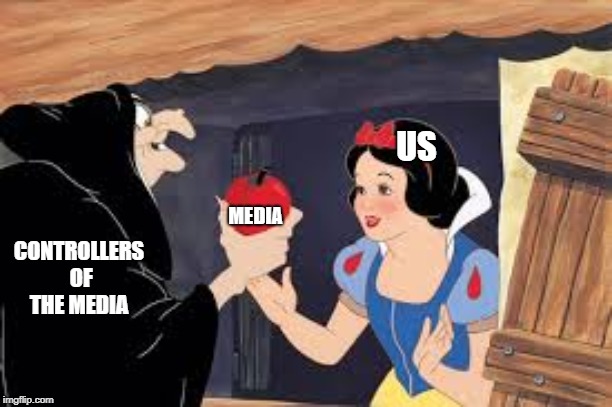
Like Chomsky and Herman said, those who control the media create what they want us to see, and we receive/ intake that information.
Here I am trying to show how Madero was acting as if there are not people suffering in the country he is responsible of.
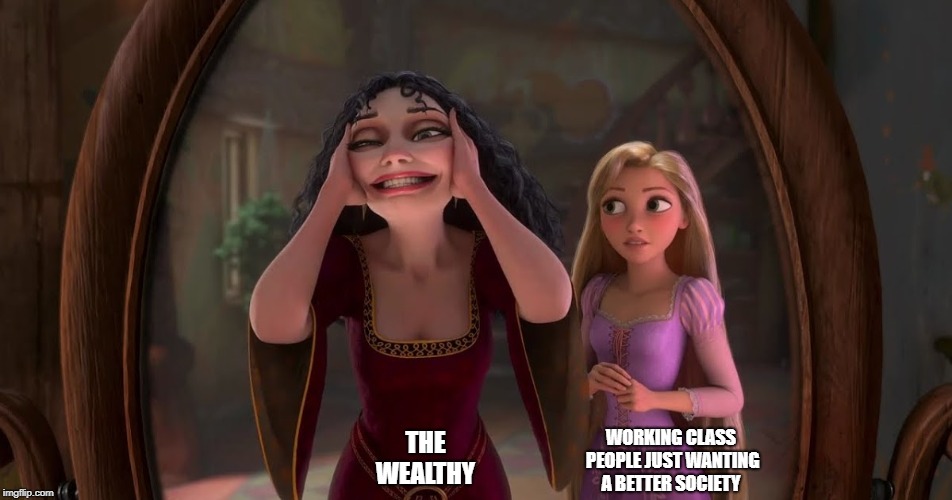
This one relates to the Williams reading and how people with influence think that what is on their agenda is more important than the other people around them. Just like Rapunzel’s wicked step mother.
I think this is just everyone as a whole when they know something important is on the media but they are wording things different or it seems to be covering something up.
Reference Page
Gramsci, Antonio. “Hegemony, Intellectuals and the State.” Cultural Theory and Popular Culture: A Reader, ed. John Storey, pp. 75-80. New York: Routledge, 1994[2013].
Chomsky, Noam and Edward Herman. “A Propaganda Model,” in Manufacturing Consent: The
Political Economy of the Mass Media, pp. 1-35, New York: Pantheon Books, 1988.
Lapin, Tamar. “Maduro Walked out of Interview When Showed Video of People Eating
Trash.” New York Post, New York Post, 26 Feb. 2019, nypost.com/2019/02/25/maduro-walked-out-of-interview-when-showed-video-of-people-eating-trash/.
Williams, Raymond. “Marxism and Literature,” pp. 55-71. New York: Oxford University Press,
1977.

 Melissa MCS